

In 1953, Robert Sheckley published a short story called “Specialist”. It is about a spaceship that is not a machine.
The Ship is alive. It is made of different beings, each with one function. One navigates. One drives. One sees. One thinks in ways the others cannot. It works because every part does something distinct, and because all of them understand the Cooperation.
Then a photon storm kills the Pusher, the being whose job is to move the Ship faster than light. The crew does what the system requires. They feed his body to Engine, who runs on atomic energy. Then they go looking for a replacement.
They find Earth.
They bring a human aboard
He panics. He fights. He tries to break through the walls with a piece of metal.
Eventually they feed him.
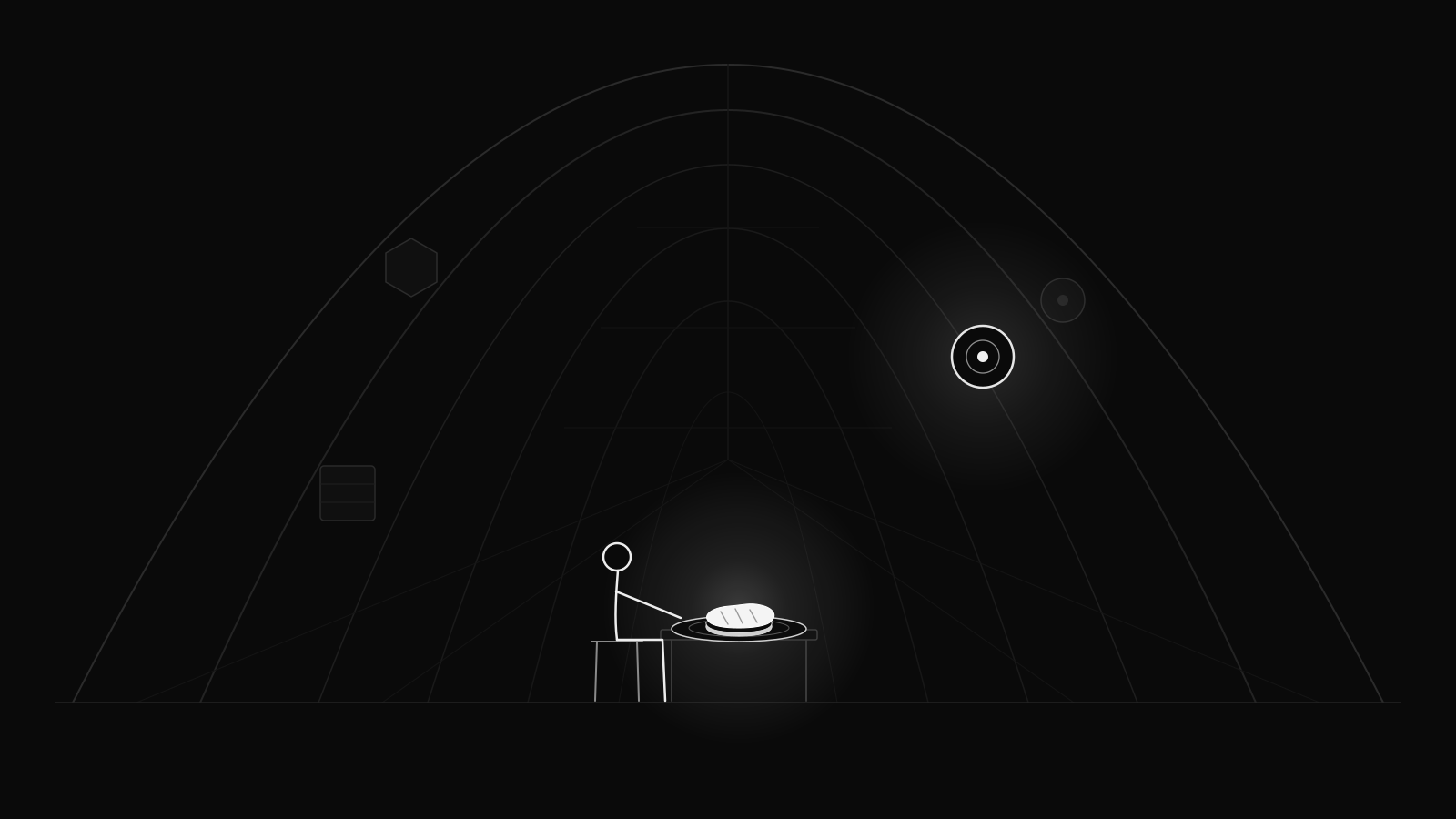
“My God, a steak,” he says.
That line has stayed with me. It captures something precise about how most people meet a thing they do not understand. Not strategy. Not questions. Not curiosity about the system around them. Appetite. Relief. The immediate thing.
I see the same reflex every time a company meets AI.
The system did not use his capability. It revealed it.
What follows is one of the stranger negotiations in science fiction.
Talker explains the Cooperation. He tells the human that people are Pushers by nature, that their wars and their frustration come from having a capability and nothing worthy to Push against. Then he opens all the circuits and shows him the whole picture: every member of the crew, every home planet, the entire fabric of the Cooperation. He shows him what belonging actually looks like.
The human agrees to go. Not because he is certain. Because he decides to believe it.
Then he tries to Push. Nothing happens.
He looks inward and finds a deep well of doubt and fear. He stares into it and sees his own face. That is where the Pusher organ was. Not separate from the fear. Inside it.
He Pushes. The Ship accelerates to eight times the speed of light.
The system did not just use what he could do. It revealed it to him. That is the sentence I keep coming back to when I think about AI in business.
AI is a crew member, not the crew
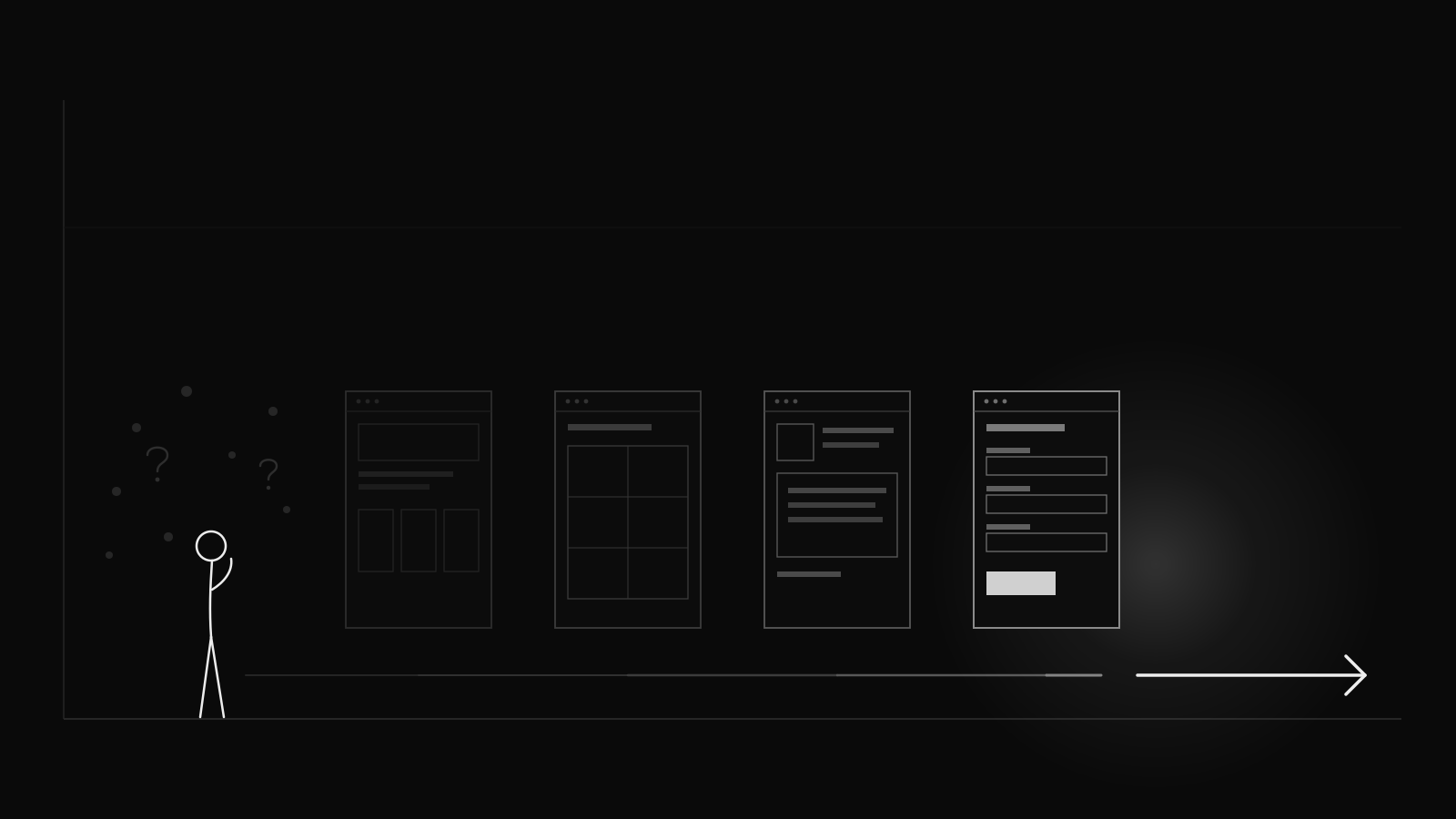
Here is the mistake almost everyone makes.
They treat AI as the Cooperation. The whole system. The thing that will move the business faster than light on its own.
It is not. AI is one possible member of the crew. A capable one. But a Pusher with no Ship around it pushes nothing.
The real work is the Cooperation itself: the roles, the context, the data, the workflows, the feedback loops, and the human decisions that decide whether any intelligence is useful. That work is unglamorous and it does not demo well.
I have written before about how a B2B growth system is an assembly of parts that only works as a whole. AI does not change that. It adds one more crew member, an unusually capable one, to a Ship you still have to design.
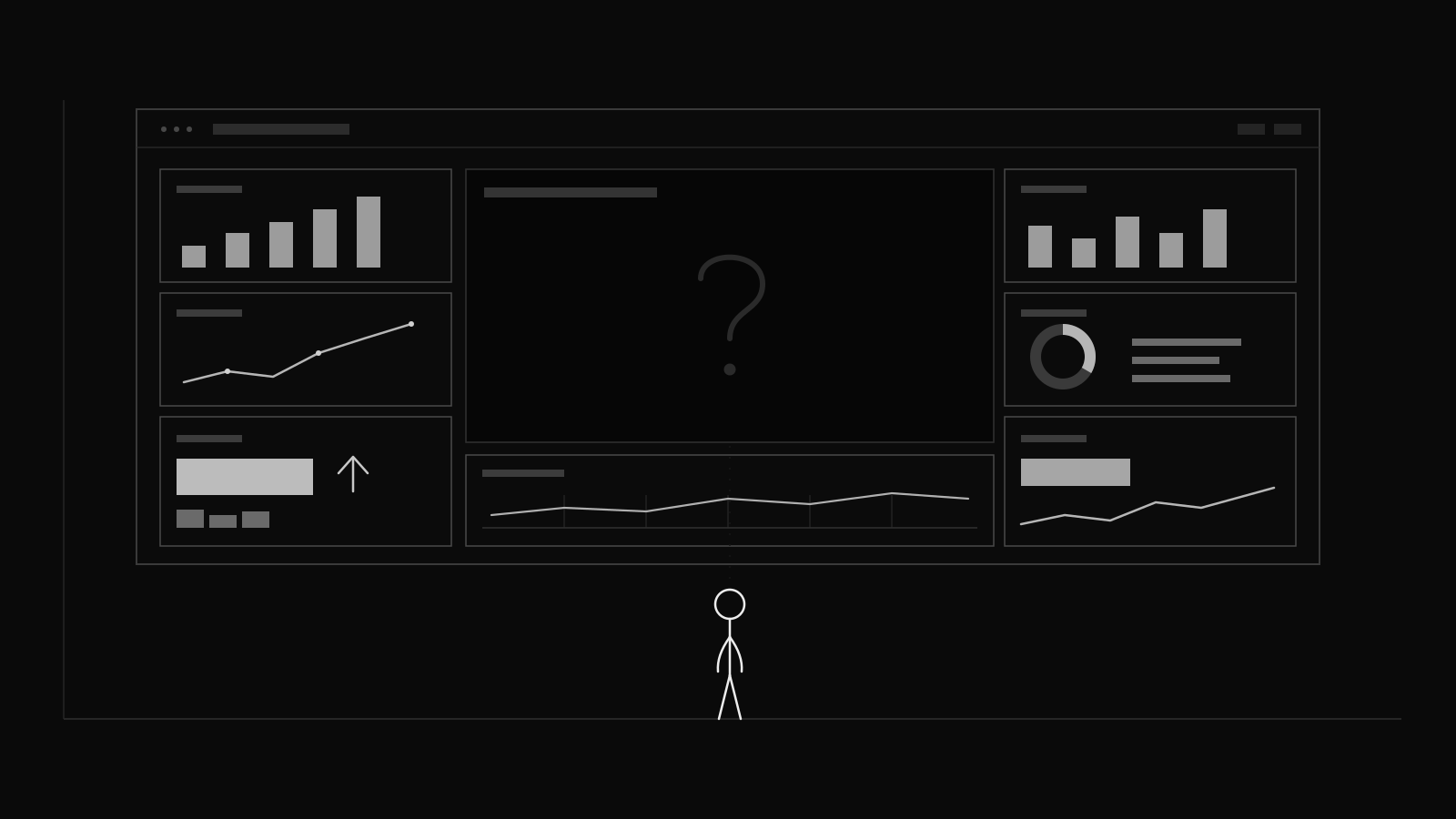
So most companies skip the design. They see the output, they feel the relief, they say my God, a steak. The demo is impressive. The strategic questions never get asked. Six months later they own an expensive capability and have nothing worthy to point it at.
The system will not make the choice for you
The Ship is not sentimental. It consumed its previous Pusher and moved on without ceremony. That is worth sitting with.
Systems do not make moral decisions by themselves. They optimise for whatever they are built to optimise for. Which means the people designing them carry the full weight of that choice.
So the question is not whether AI is powerful. It plainly is. The question is what kind of Cooperation you are building around it.
One that reveals human capability, the way the Ship revealed the Pusher to himself? Or one that simply replaces it, the way the crew replaced the body they fed to Engine?
Both are systems. Both work. They produce very different companies.
The question strategy starts with
Every company evaluating AI is really being handed a Pusher and asked what to do with it.
The unserious answer is to marvel at the steak. To be impressed by the output and stop there.
The serious answer is to design the Cooperation: the roles, the context, the decisions, and the human judgment that turn raw capability into direction. That is not the tool. That is the system around the tool. And it is the only part that was ever your job.
Strategy does not begin with the tool. It begins with the system.
If you are working out what that system looks like for your business, before buying more tools to fill it, that is the conversation the Strategy Blueprint is built for.
Common questions
Questions this note answers
Is AI a business strategy?
No. AI is a capability, not a strategy. A strategy is the system that decides where a capability points: the roles it fills, the context it is given, the data it runs on, the workflows it sits inside, and the human decisions that judge its output. AI dropped into a business with none of that around it produces impressive demos and no direction. The strategy is the system you build to make the capability useful, and that part is still your job.
What does it mean to build a system around AI?
It means designing everything AI cannot design for itself: the specific problem it is pointed at, the context and data it needs to be right, the workflow it plugs into, the feedback loop that tells you whether it is working, and the human decisions at the edges. The tool is one component. The system is the roles, the handoffs, and the judgment that turn raw capability into a repeatable result. Most companies buy the component and never build the system, then wonder why the output never compounds.
Should AI replace employees or augment them?
That is a design decision, not a property of the technology. You can build a system that reveals what your people are capable of by removing the work that was never worth their time, or one that simply replaces them. Both are viable systems and both function. They produce very different companies. The technology will not make that choice for you, which means the people designing the system carry the full weight of it. Decide it deliberately, before the tool decides it by default.
Noticed a typo, technical nuance, or want to suggest an improvement?
Send feedback